
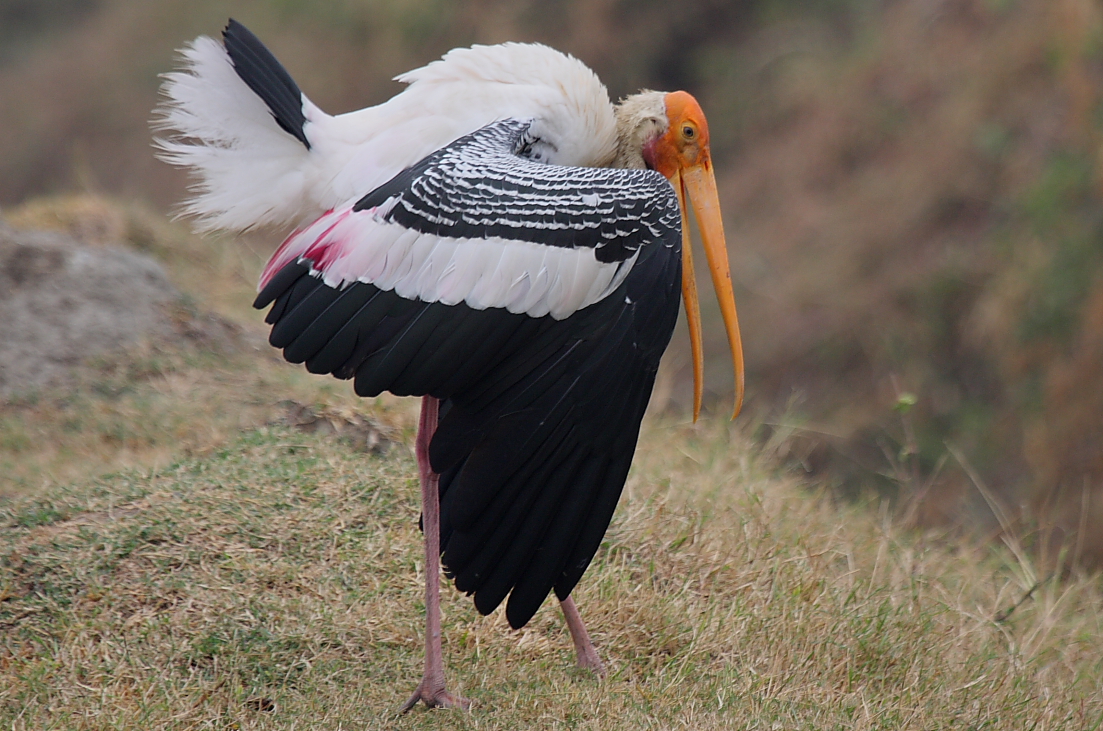
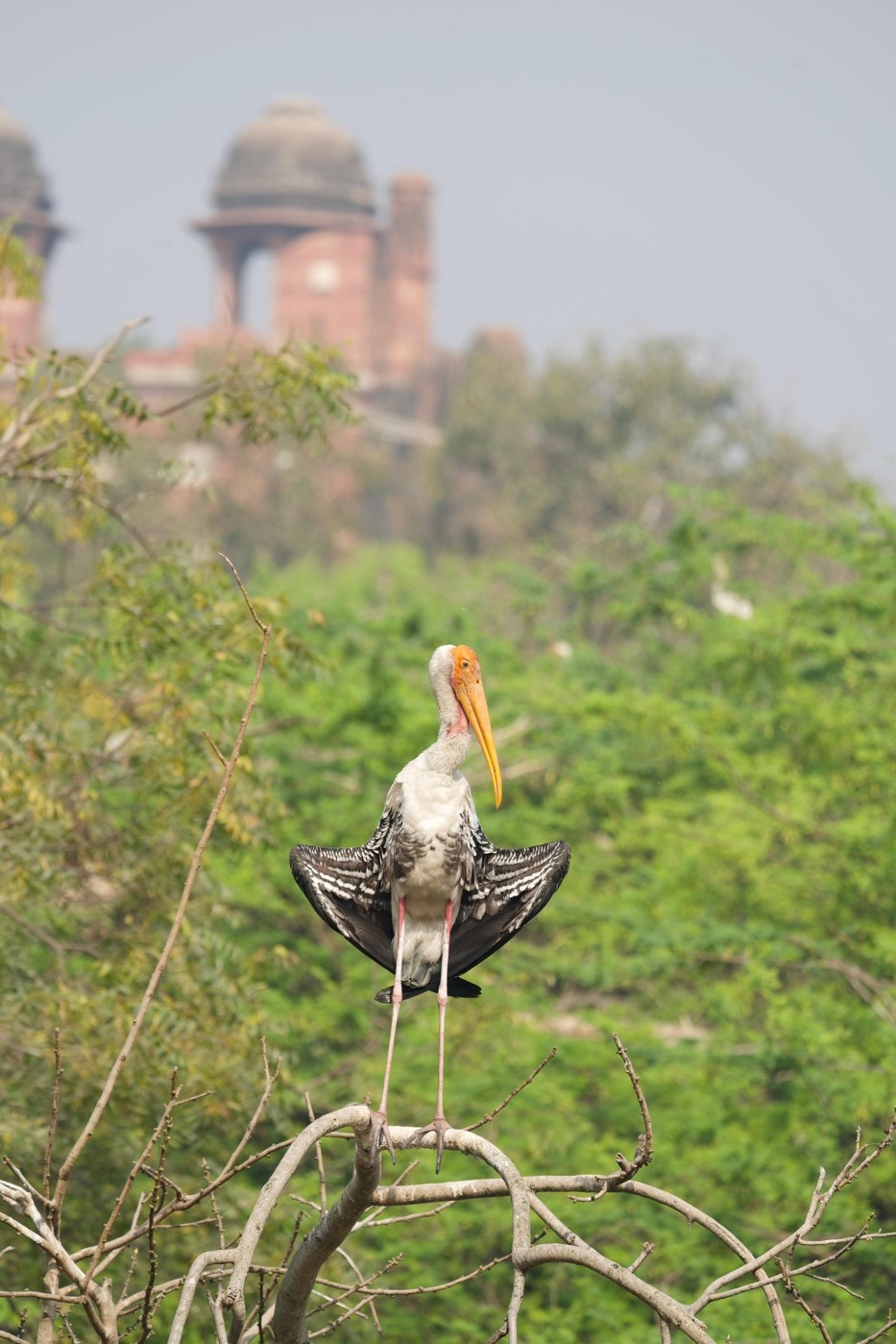
New approaches are increasingly helping to answer long-standing questions about individual behaviour in colonial waterbirds. A recent study on Painted Storks Mycteria leucocephala breeding in New Delhi illustrates how Deep Transfer Learning can be used to identify individual birds and document nest-site fidelity using non-invasive methods.
Working in a long-established colony within the Delhi Zoo, researchers repeatedly observed a distinctive male over four consecutive breeding seasons (2022–2025). The bird, recognisable by a mark on its throat, was consistently recorded in the same nesting area each year. While this strongly suggested nest-site fidelity, confirming that it was indeed the same individual remained a challenge without physical marking.
To address this, the study applied Deep Transfer Learning by adapting a pre-trained ResNet-50 model to distinguish this individual from other painted storks using a large set of photographs. The resulting model (PsScarNet) was able to reliably identify the bird across years, with additional validation provided through visualisation techniques highlighting the features used by the model.
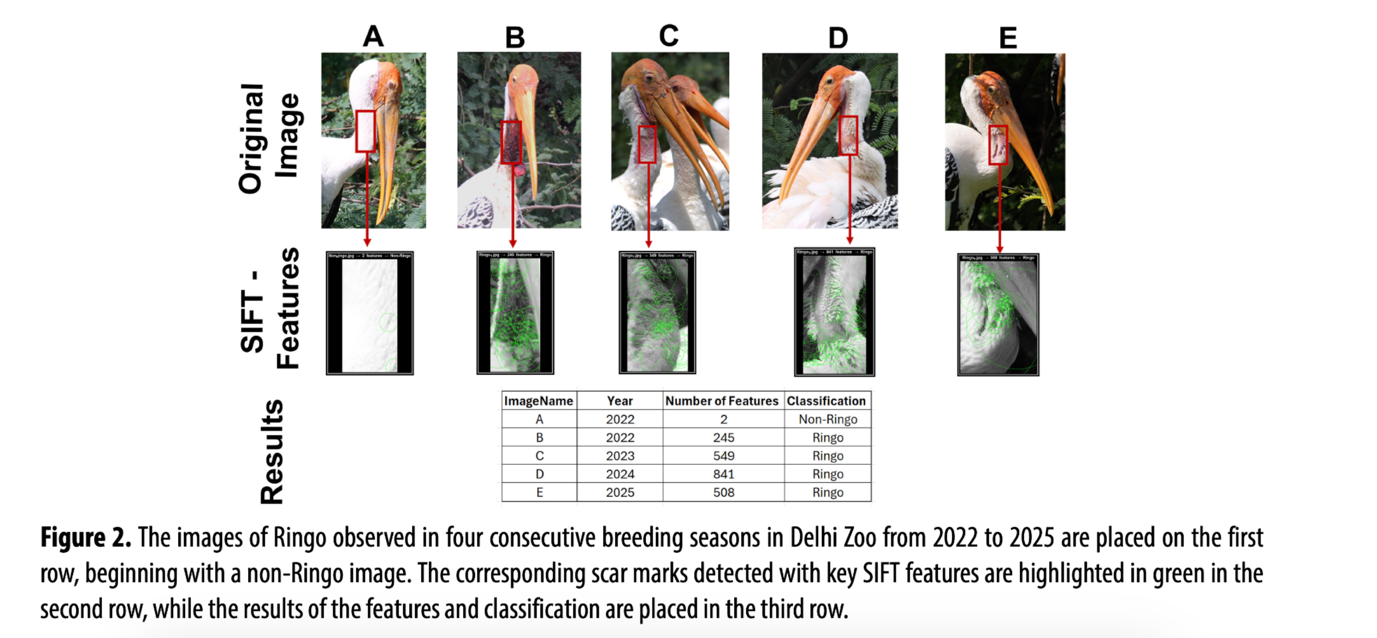
The results confirm that the same individual returned not only to the same colony, but to the same nesting area within it over multiple years, successfully breeding in each season. This provides strong evidence of nest-site fidelity in the species, while also offering insights into survival and breeding consistency in the wild.
Beyond the specific case study, the work highlights the potential of Deep Transfer Learning as a practical tool for research and monitoring of storks, ibises and spoonbills. By enabling individual identification from photographs alone, this approach avoids the need for capture or marking, reducing disturbance in sensitive breeding colonies. It also opens new opportunities to explore questions such as site fidelity, mate fidelity and long-term individual performance using existing image datasets.
Such methods are particularly relevant for the work of specialists in stork, ibises and spoonbills (& shoebill), where improving monitoring and knowledge while minimising disturbance remains a key priority. As image-based datasets continue to grow, including through routine monitoring and citizen science, these tools are likely to become increasingly useful across species and regions.
Further details of the study can be found in Royal Society Open Science: Individual identification and confirmation of nest site fidelity in Painted Stork, authored by Abdul Jamil Urfi, Mylswamy Mahendiran, Mylswamy Parthiban, Paritosh Ahmed
Feature picture: Painted Stork Mycteria leucocephala ©Gopi Sundar